


(Note: this post was originally published on February 9, 2020. It has since been updated with a few tweaks.)
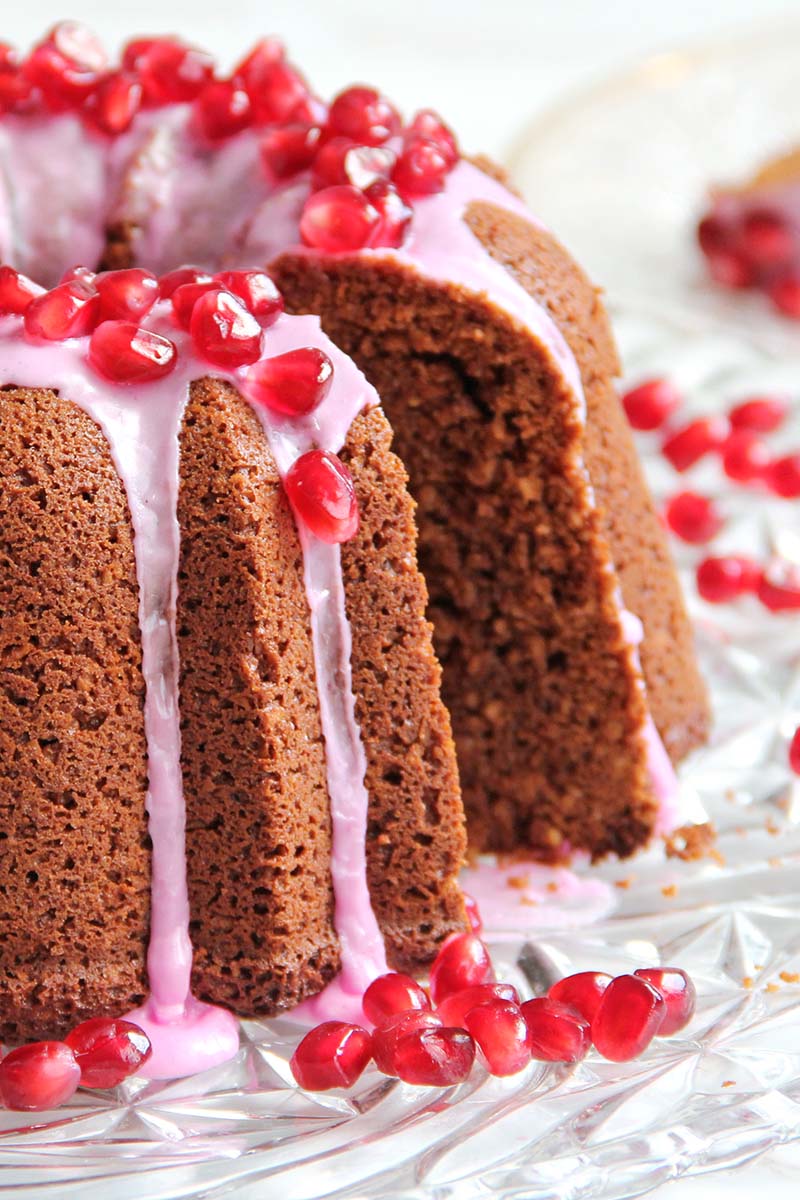
Winter is the perfect time for gingerbread, don't you think? Thanks to this dairy-free, gluten-free gingerbread cake, you can enjoy those flavors whenever the craving strikes. Despite the fact that this bundt cake comes together quickly, it's eye-catching and feels special. It's great for a holiday or winter gathering, or even Valentine's Day breakfast.
This is not your average gingerbread cake. Traditional recipes usually rely on refined flour, refined sugar, and copious amounts of low-quality oil. In contrast, this celebration-worthy cake is gluten-free thanks to whole oats, entirely dairy-free, and naturally sweetened with molasses and maple syrup. Best of all, the batter for this easy "blender cake" is made right in the blender. That means you can whip up this oat flour gingerbread cake with minimal hands-on time and only a few dirty dishes.
In terms of its flavors, this gingerbread blender cake is warming and cozy. It's loaded with ginger, molasses, cinnamon, allspice, and cardamom. These are all classic gingerbread spices, but amped up in their intensity for a cake that screams winter coziness. Because the sweetness is minimal (just molasses and maple syrup), the spices really shine.
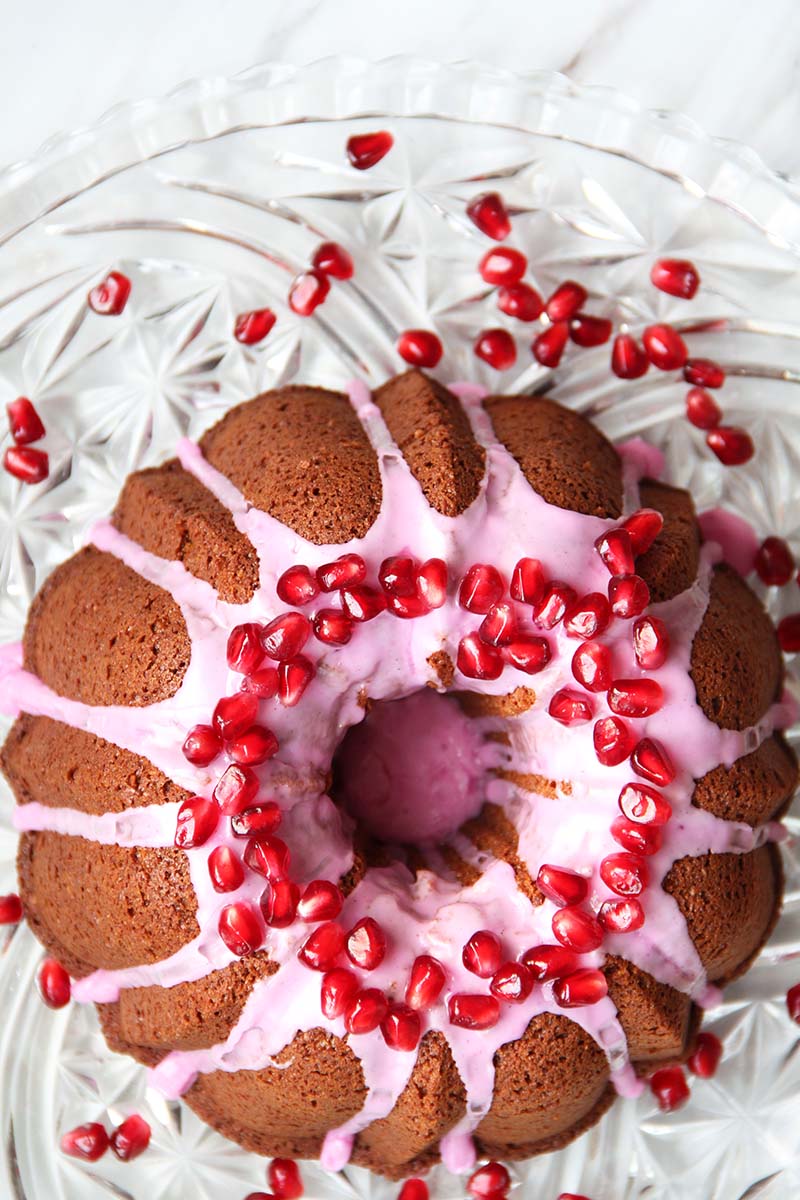
Like the name implies, the batter for a blender cake is made right in the blender. It's convenient, fast, and minimizes dirty dishes. Additionally, thanks to the powerful blender, you can use whole oats as the flour component. There's no need to buy pricey oat flour or to dirty a separate kitchen gadget to grind your own oat flour. The texture of the resulting cake is hearty, moist, and a bit fluffy, similar to a muffin or a baked donut.
Intrigued by the idea of preparing batter in the blender? This Apple Cider Donut Blender Cake and this Pumpkin Spice Blender Cake both use similar ingredients and showcase iconic fall flavors. For spring, try this Blueberry Lemon Tahini Blender Cake. Or, if you're in the mood for muffins, I think you'll also love these Vegan Morning Glory Blender Muffins, these Vegan Mocha Banana Blender Muffins, and these Peanut Butter Banana Blender Muffins.
The secret to making this easy oat flour bundt cake is to add the wet ingredients to the blender before the dry; using this sequence helps to prevent the dry ingredients from clumping below the blades. Other than that, this is a dump-and-blend recipe; there are no separate bowls for wet/dry, no sifting, and in general no fuss. After you bake the gingerbread blender cake, you'll top it with an easy icing (see options below) and eye-catching pomegranate arils.
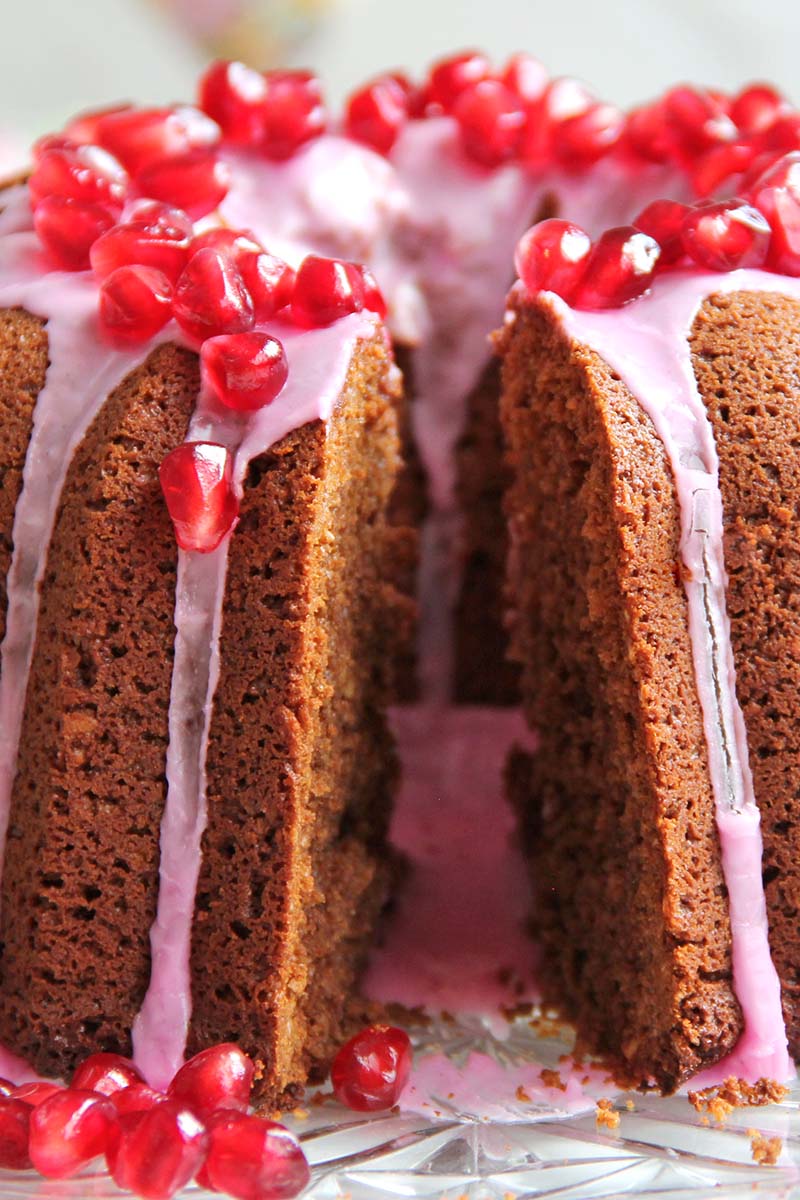
Here's what you'll need for this dairy-free, gluten-free gingerbread cake, as well as some thoughts, tips, and possible substitutions. If you make any substitutions, I'd love to hear about it in the comments section below.
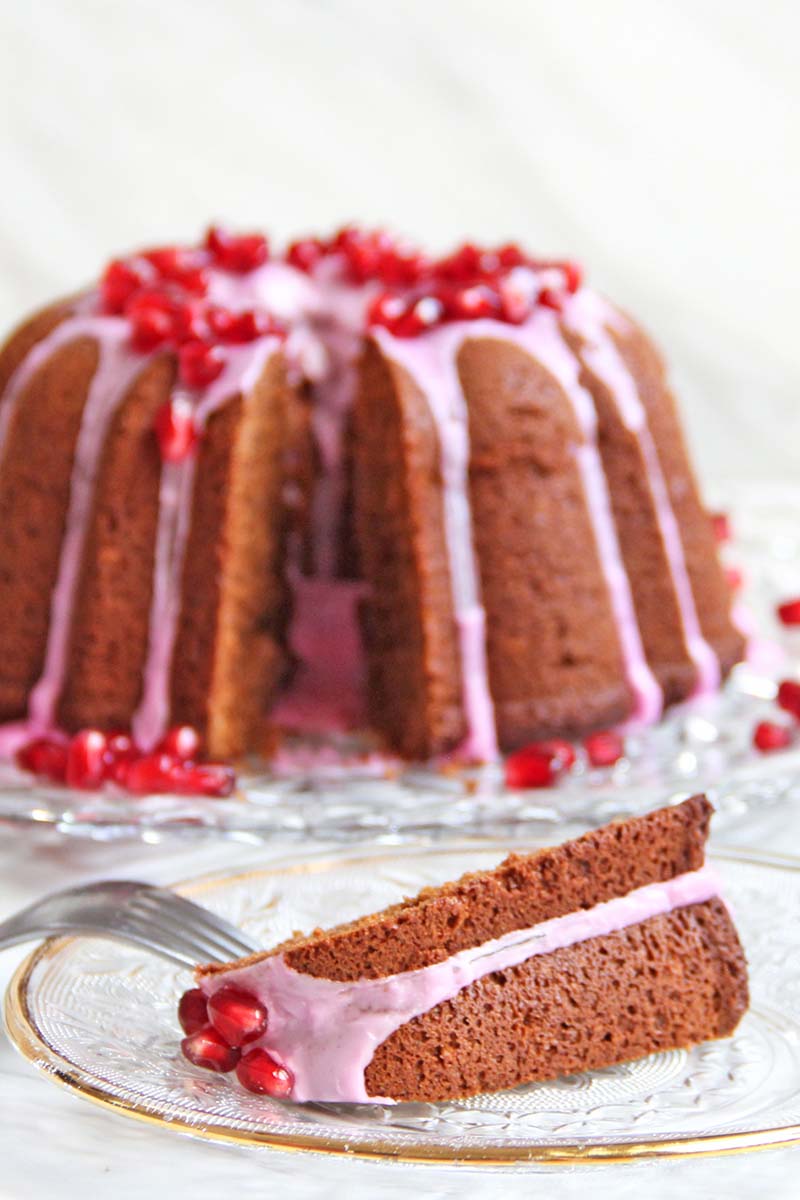
As written, the recipe below calls for a standard confectioners' sugar icing, made with ginger liqueur for cozy flavor. It's very tasty and beautiful, so it's perfect for a special occasion. That said, to keep this dairy-free, gluten-free gingerbread cake lower in sugar, there are a number of other icing options that will work. Here are some possibilities:
Option #1 (classic icing, as written in the recipe): This icing works well for a special occasion because it hardens nicely without soaking into the cake and the color is vibrant. Combine about a cup of confectioners' sugar and a few generous pinches of pink pitaya powder for color, then add ginger liqueur a teaspoon at a time until the icing is thick and smooth.
Option #2 (coconut butter): This option has no added sugar and a nice final color, but the appearance won't be as polished. Just heat up some coconut butter and stir in pink pitaya powder until you're happy with the color, then drizzle it onto the cake. It's delicious and decadent, but it won't harden in the same way, so wait to add it until just before serving.
Option #3 (tahini icing): This option is tasty but not as visually charismatic because the tahini's tan color will result in a less vibrant pink hue. Use a couple tablespoons of tahini as the icing base, stir in a dash of maple syrup to sweeten it, mix in pink pitaya powder for color, and add a teaspoon of melted coconut oil if needed to thin it out. Similar to the option above, it won't harden like a confectioners' sugar icing, so it's best left off until just before serving.
Option #4 (naked cake): This healthy gingerbread blender cake is still delicious without icing, although it doesn't have quite the same visual appeal or decadence.
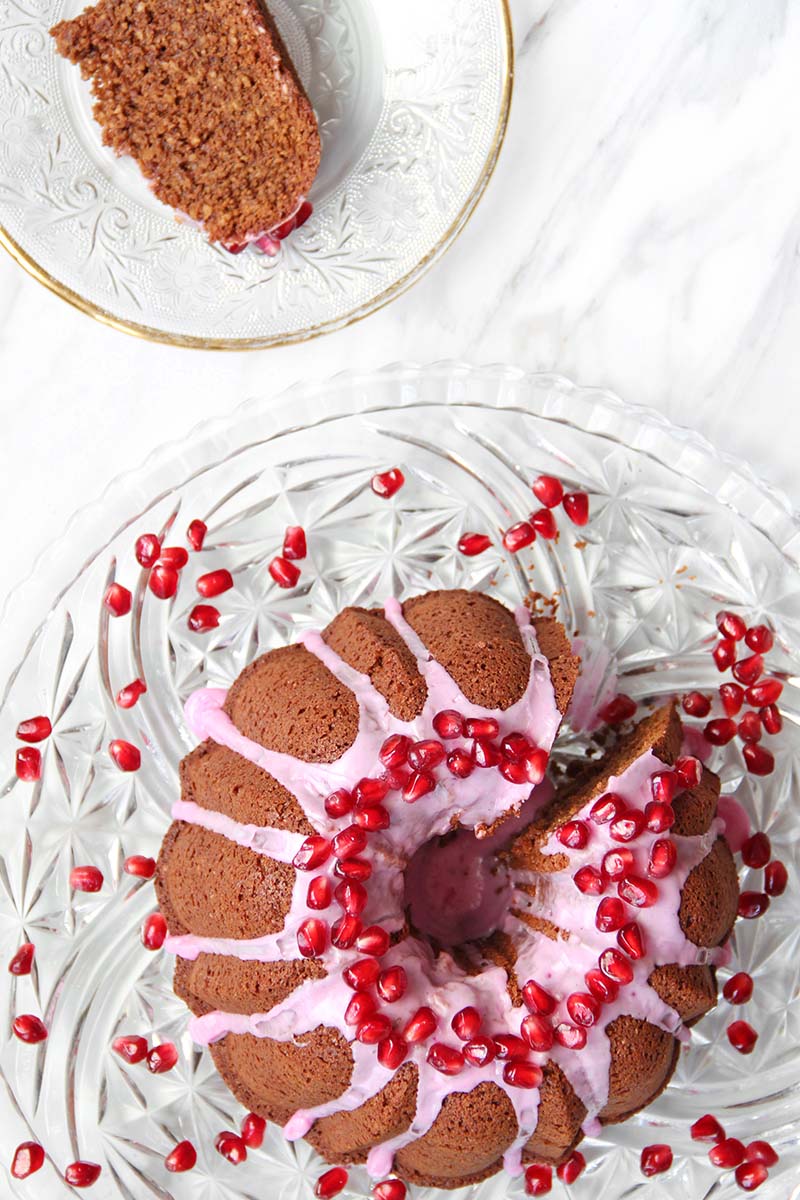
I can't wait for you to try this cozy and healthy gingerbread blender cake. It's loaded with nostalgic flavors, but it's easy to make at home and uses simple, nourishing ingredients. Because it's dairy-free, gluten-free, and can be made vegan with a single swap, it's a treat that almost anyone can enjoy.
How will you savor this easy gingerbread bundt cake? The batter comes together in just a few minutes, so you can make it again and again throughout the holidays and winter. Whether you have a slice for breakfast, bring a piece with you for on-the-go snacking, serve it as a dessert for a winter party, or make it for an eye-catching breakfast on Valentine's Day morning, you're going to love the cozy flavors.
It makes me so happy to hear from you and see your creations! Please leave a comment below and let me know what you think about this recipe. If you post a photo on Instagram, hashtag #TheRogueBrusselSprout and tag me (@TheRogueBrusselSprout) in the post text so that I'm sure to see it.
This gingerbread blender cake is cozy, healthy, and easy to make. Featuring oats, nut butter, and warming spices, the batter for this dairy-free, gluten-free cake comes together in minutes right in the blender.
For the Cake
For Icing and Topping
Did you make this recipe? Did you make substitutions? How did you serve it? Any helpful tips? Please share your thoughts, since these insights are really useful to both me and to other readers.
Leave a Comment